
Thomas Fraser
Climbers can clean their crags during Obed event
 Volunteers are needed to improve and maintain climbing and approach areas at the Obed. National Park Service
WARTBURG — The Obed Wild and Scenic River will host the park’s annual Adopt-a-Crag event on Saturday, Sept. 11 in cooperation with the East Tennessee Climbers Coalition.
Volunteers are needed to help with a variety of projects, including general trail maintenance and litter pickup. Participants should meet at the Lilly Pad Hopyard Brewery at 9 a.m. to register and receive a project assignment. Carpooling is suggested, and volunteers should bring their own lunch, water, hand tools and gloves.
When the work is done, volunteers are invited to spend the day climbing, kayaking or hiking. The ETCC plans a volunteer appreciation dinner that evening at the Lilly Pad.
For more information, contact the Obed Wild and Scenic River at (423) 346-6294.
SACE belays solar power on Global Climbing Day
MEMPHIS — Area residents were invited to a film screening of “Keep the Lights On” and a panel discussion at the Memphis Rox climbing gym with community members, local advocates and policy experts. The event, which ran from 10 a.m. to 4 p.m. Saturday, Aug. 20, coincided with Global Climbing Day, and professional rock climbers Nina Williams, Manoah Ainuu (who recently summited Everest), Olympic Silver Medalist Nathaniel Coleman, and Fred Campbell hosted and participated in community and climbing-oriented events prior to the film screening and conversation.
The film follows Memphis Rox staff member and leader Jarmond Johnson, recounting his experiences with intermittent energy access growing up in South Memphis, his growth into a gang activist and mentorship role at Rox, and, ultimately, working with professional rock climber and environmental activist Alex Honnold (best known for the academy award-winning film, Free Solo) to bring solar energy to the gym. Following the screening, Jarmond and a panel of experts discussed takeaways from the film, and how equitable access to solar energy could help all Memphians keep their lights on.
— Southern Alliance for Clean Energy
That ain’t country: Activists protest proposed downtown tree removal in Knoxville
KNOXVILLE — People assembled at 6 p.m. Aug. 19 to speak for the trees threatened by development of an art installment at the half-acre Cradle of Country Music Park at the corner of Gay Street and Summit Hill Drive downtown.
The Harvey Broome Chapter of the Sierra Club organized the protest against the removal of five mature oak trees to make way for the sculpture and its base, which was originally commissioned to a New York City artist in 2018 and will cost the city $600,000, according to reporting from Compass. The online news outlet also reported Friday that Councilwoman Seema Singh has requested a pause in the project to determine whether there are alternatives to removing the trees.
Parking fees set for Smokies; camping costs will increase
 You might have to pay to park at some of these trailheads in Great Smoky Mountains National Park starting next year. These old trail badges are displayed in Fontana Village on the south side of the Smokies. Thomas Fraser/Hellbender Press
Smokies parking fees will generate $7 million in revenue for park infrastructure
GATLINBURG — Getting outside just got more expensive.
Great Smoky Mountains National Park officials announced Monday the park would proceed with plans for a $5/per day parking pass required of all cars staying in one spot for more than 15 minutes.
Weekly passes will be $15, and annual passes will be available for $40, according to a release from the park service. Fees will also increase $3 for backcountry and campground permits, meaning campers and backpackers will have to fork over $8 a night.
Falling trees accountable for very few deaths in Smokies, but they do happen
CITIZEN TIMES: Child killed by falling tree was a very rare twist of horrible fate
Karen Chavez of the Asheville Citizen Times wrote a great article on tree-related deaths in Great Smoky Mountains National Park and beyond following the death last week of a Georgia child killed by a falling tree as she was occupying a tent in Elkmont Campground.
She reports the death of the child was only the 11th tree-linked death in the national park’s history.
Updated: Summer of weather anomalies continues as deadly floods ravage SE Kentucky
 Heavy flooding is seen in eastern Kentucky this weekend. State of Kentucky/Office of Gov. Andy Beshear
Another round of severe flooding hits the Southern Appalachian region
UPDATED: The death toll from last week’s unprecedented flooding in Kentucky reached at least 29, as some areas contended with additional flooding over the weekend. Fifteen of those, including four children, died in Knott County, which is about 100 miles north of Kingsport.
Water service to nearly 67,000 connections has been affected, as well as 17 wastewater-treatment systems in eastern Kentucky, according to Gov. Andy Beshear’s office.
“We are currently experiencing one of the worst, most devastating flooding events in Kentucky’s history. The situation is dynamic and ongoing,” Beshear said in a statement.
“What we are going to see coming out of this is massive property damage and we expect loss of life. Hundreds will lose their homes. And this will be yet another event that will take not months, but years, for our families to rebuild and recover from.”
Falling tree kills child in Great Smokies
ELKMONT — A 9-year-old girl died early Wednesday after a tree fell on a tent she was occupying in Great Smoky Mountains National Park.
The unidentified child was among a group of people camping in Elkmont Campground when the red maple, 2 feet in diameter, fell shortly after midnight and crushed the girl in her tent, according to the National Park Service.
Congo retreats from climate commitments to fuel its fossil energy sector
NYT: Why should we care when you built your world with fossil fuels?
The government of Congo is recruiting fossil-fuel extractors to suck oil from beneath tropical forest and bog ecosystems that rival the Amazon in their role as carbon sinks.
Opponents say it’s another step in knocking over the dominoes of climate renewal as Russia’s invasion of Ukraine continues to roil energy markets and threaten international commitments to addressing climate change.
Come paddle Beaver Creek May 20 and reclaim your water
Knox County Parks & Recreation has cleared at least 12 miles of a planned 44-mile blueway. Get on the water and enjoy it.
Who wouldn’t want to canoe down the beautiful Knox County Water Trail? Well you don’t have to wait. On May 20, 2023 you can join the Float the Beaver trip.
All event proceeds are dedicated to the continued improvements on Beaver Creek including debris clearing, creek bed cleanup, and installation of public access docks.
The Knox County Water Trail project was officially started in 2020 by Mayor Glenn Jacobs establishing this 44-mile stretch of navigable water which stretches from Clayton Park in Halls to Melton Hill in Harden Valley. The initiative is focused on clearing and caring for the area to ensure navigable waters.
Torrential rains in Smokies destroy trails, roads and other infrastructure
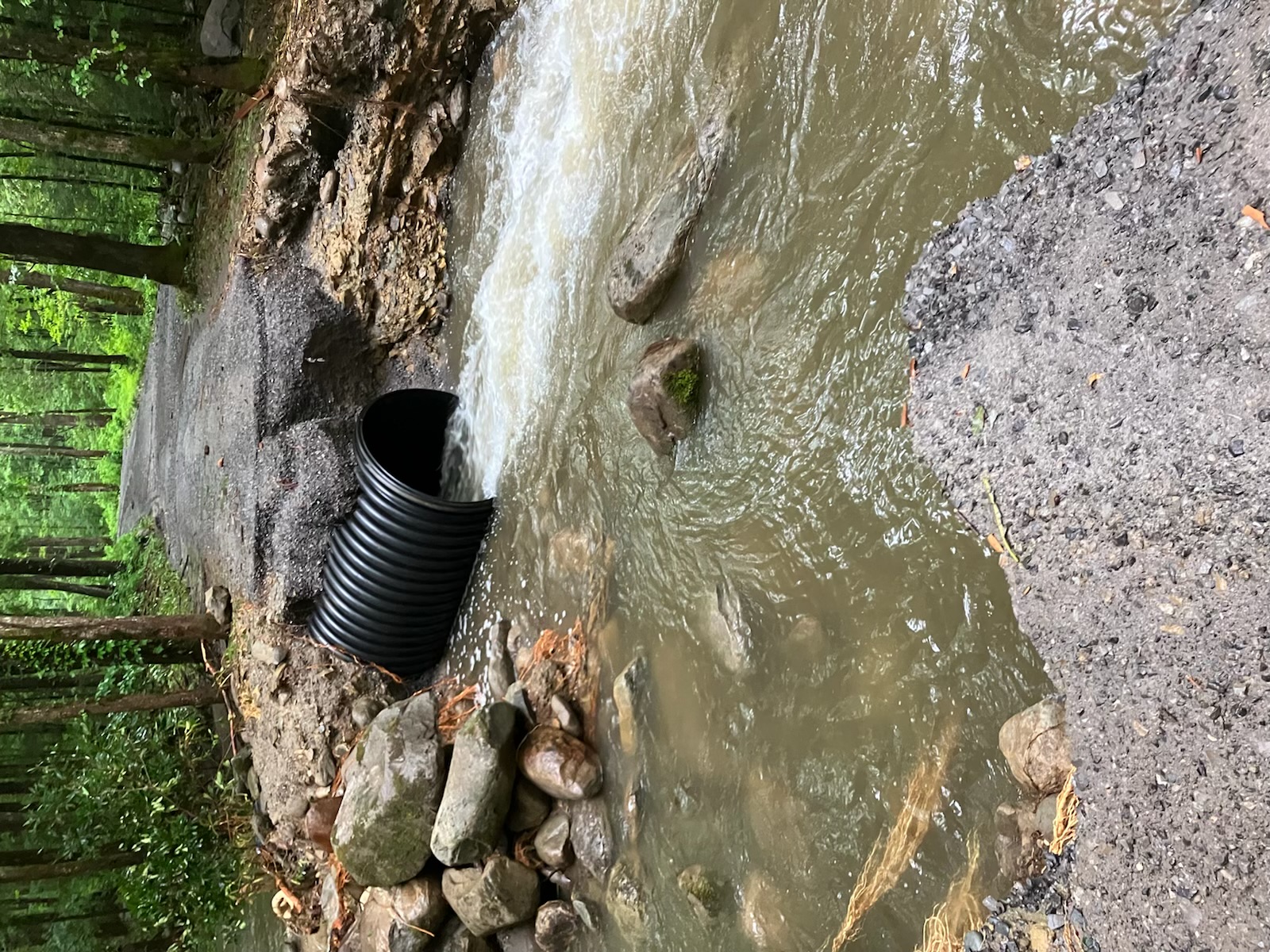 A washout is seen along Porters Creek Road in Great Smoky Mountains National Park following torrential rain on July 12. National Park Service
Flooding causes Smokies damage, prompts water advisory for Sevierville
SEVIERVILLE — Extremely heavy rain on July 12 in the Smoky Mountains caused a cascade of problems now just coming to light.
Sevierville and Sevier County issued a boil-water advisory early Thursday after debris flushed by Tuesday’s floodwaters clogged the city water utility’s main intake on the French Broad River, leading to pressure decreases that opened up lines to possible outside contamination.
In Great Smoky Mountains National Park, Greenbrier campground was closed indefinitely after the swollen Middle Prong of the Little Pigeon River wiped out roads, trails and bridges in the area.