
Thomas Fraser
Big South Fork closes 60-acre donut hole
 National Park Service
Land conservancy and estate of long-ago German immigrant expands protection of North White Oak Creek
Big South Fork National River and Recreation Area has grown inward by 60 acres.
The National Park Service announced this week that it officially acquired the donated acreage along North White Oak Creek within Big South Fork. It had previously been in private ownership.
The Allardt Land Company and the estate of Bruno Gernt (a remarkable individual in his own right) originally donated the approximately 60 acres within the boundaries of Big South Fork to TennGreen Land Conservancy. In December 2021, TennGreen transferred the property to the National Park Service.
“This tract provides essential protection for the south side of North White Oak Creek, a popular area in the southwest portion of the (125,000-acre park that straddles the Tennessee and Kentucky state lines in the Cumberlands).
“Park visitors will now forever be able to enjoy peaceful views across the creek of an oak-hickory and northern hardwood forest canopy,” Superintendent Niki Stephanie Nicholas said in a press release.
“We truly appreciate the Allardt Land Company, Estate of Bruno Gernt, and TennGreen for their generosity.”
Amorous salamanders heat up the Southern winter
 Rob Hunter/Hellbender Press
Knox News: Winter a key time in salamander reproductive calendar
The woods, fields, rivers, creeks and wetlands of Southern Appalachia aren’t as barren as one would think in the midst of winter.
News Sentinel science reporter Vincent Gabrielle gives a solid rundown of why some of our amphibious denizens, including hellbenders, put themselves out there when so many other Appalachian critters retreat to burrows, dens and nests when the snow begins to blow.
“There are more salamander species that call the Southern Appalachians home than any other place on Earth. There are 30 salamander species present in Great Smoky Mountains National Park. Out of the 550 known salamander species on the planet, 77 live here in our backyards. Their bright colors make them the living jewels of Appalachia,” Gabrielle reports.
Walker Sisters off-limits for now
Great Smoky Mountains National Park closed the Walker Sisters Cabin because of safety concerns including a shifting chimney.
The cabin is now inaccessible, but visitors can still explore the homestead and outbuildings as work proceeds to analyze and fix the landmark Smokies dwelling.
Restoration work will be funded by Friends of the Smokies.
Per the National Park Service:
“The cabin dates back to the 1800s and was occupied by the Walker Sisters until 1964. Park crews are concerned about recent movement around the chimney in the two-story cabin. Noticeable cracks and buckling around the stone masonry need to be repaired and stabilized to prevent further movement. The cabin is now closed to all use.
“Cabin renovations, including roof replacement, are planned for the 2022 field season. The Friends of the Smokies have provided funding for this critical work as part of the Forever Places campaign to protect and preserve the park’s historical resources. The historic farmstead, including additional outbuildings, will remain accessible during the cabin closure. Visitors may reach the area by hiking approximately 1.4 miles along the Little Brier Gap Trail located near the Metcalf Bottoms Picnic Area.”
For more information about the Walker Sisters, please visit https://www.nps.gov/grsm/learn/historyculture/walker-sisters.htm.
SACE works to keep us all warm this winter
This is a submission from the Southern Alliance for Clean Energy.
After public advocacy from Knoxville community members, the KUB board passed a resolution that will deliver $5 million for emergency bill assistance to benefit those most in need, and an additional $1 million for weatherization to improve the comfort of people’s homes while lowering their bills by increasing energy efficiency. These funds are part of a pandemic relief credit from TVA.
KUB staff proposed a resolution in October that would have allocated $1.3 million of the total $7.3 million TVA pandemic recovery credit toward payment of debt owed by KUB customers, and the remaining $6 million would be distributed as a monthly bill credit for all residential and small business KUB customers. This would have resulted in an average savings of $17 over 12 months, or about $1.40 per month for all KUB customers, regardless of their level of need for pandemic relief.
Knoxville Water and Energy for All (KWEA), a coalition which SACE is a part of, circulated a petition asking that KUB instead forgive all debt owed by KUB customers, and then use the remaining funds to assist households who were struggling to pay their KUB bills. KWEA delivered nearly 200 petition signatures, and the KUB board asked that the resolution be amended.
As a result of our coalition’s advocacy, the KUB board allocated not only the originally proposed $1.3 million for debt relief, but also the remaining $6 million for customers in need.
While KUB did not pledge to forgive all debt, this is certainly a major win for the community.
The KUB Board’s decision to reallocate funds demonstrates the power of our community speaking up to advocate for ourselves and our neighbors.
Lunker sturgeon are out there again: report your catch to receive a certificate
Email sturgeon.reports (at) tn.gov an image of your catch-and-release with the date, location and your name to obtain your official certificate! This email address is being protected from spambots. You need JavaScript enabled to view it.
WBIR: Holston River sturgeon surging
The population of lake sturgeon, a survivor since the Cretaceous Era that barely escaped the ravages of modern dams and reservoirs, is on the upswing in the Holston River and other branches and tributaries of the Tennessee River system. The last record of the fish in the valley before restoration efforts began is about 1960, according to WBIR.
Significantly older fish were identified during a recent inventory of sturgeon, giving hope that some fish were closing in on reproductive maturity. The gradual recovery is largely the result of Tennessee Wildlife Resources Agency and Tennessee Valley Authority restoration efforts, WBIR reports.
“It makes our valley richer; that fish is supposed to be here,” one researcher told WBIR about the significance of the so-far successful restoration of native sturgeon habitats.
Aerosols and atoms: ORNL supercomputer models airborne spread of Covid-19

New York Times: Oak Ridge supercomputer simulates spread of Covid-19 in water droplets
Scientists studying the spread of the novel coronavirus utilized the world’s second-fastest computer at Oak Ridge National Laboratory to model the movements of millions of individual atoms that make up the virus and aerosols that can transport and transmit it.
The virus has killed nearly 1 million Americans and infected more than 50 million since a pandemic was declared in early 2020.
“The researchers started by creating a model of the coronavirus, known as SARS-CoV-2, from 300 million virtual atoms,” the New York Times reported.
Researchers then placed the virtual virus model in an intricately detailed and microscopic model of a water droplet such as the type exhaled by those infected with the virus. The supercomputer then calculated how the droplet and its attendant virus could, for example, move within a room where people are in close quarters and exhaling and inhaling the virus.
To carry out this vast set of calculations, the researchers had to take over the Summit Supercomputer, the second most powerful supercomputer in the world.
UPDATED Jan. 24: Knox County Commission postpones consideration of massive residential rezoning in South Sector
 Virtual oblique view of Dry Hollow. In the foreground Chapman Highway just past Highland South Cemetery, where the new East Simpson Road junction becomes Valgro Road after crossing Sevierville Pike, which also received a new junction last spring. The boundary of Thunder Mountain Properties is marked in yellow. At right, its full length coincides with the county border between Knox and Sevier. Illustration by Hellbender Press.
Controversial South Knox County rezoning heads to County Commission after approval of rezoning and sector plan amendments
Knox County Commission was set to decide Jan. 24 about a controversial South Knox County rezoning that would allow for the construction of 255 homes on previously agricultural land. But because of illness of the developer’s representative, the decision on both Thunder Mountain Properties, LLC requests have been deferred to a later meeting.
To decide on zoning issues the commission meets at 7 p.m. in the City-County Building in downtown Knoxville. Still on the agenda are three other cases concerning properties in Hardin Valley that are highly contested by many area residents and concerned Knox Countians. They need all the support you can give to them. Hellbender Press will continue updating this article.
Part IV: Clear-cut controversy. Thoughts and prayers
 Library of Congress
Citizens and scientists weigh in on controversial TWRA logging plan
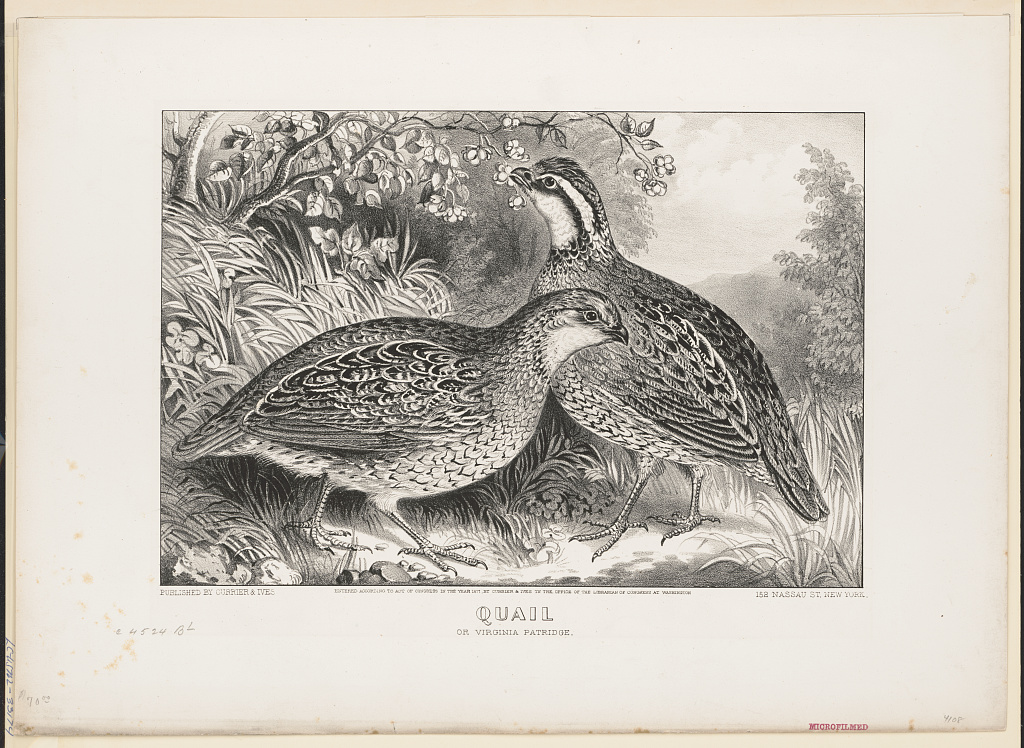
For months, Tennessee Lookout has bird-dogged a Tennessee Wildlife Resources Agency proposal to clear at least 1,000 acres of hardwood forest in the Bridgestone Centennial Wildlife Reserve in White County to create habitat for dwindling bobwhite quail.
Hellbender Press has published most of the stories, with much appreciation to Tennessee Lookout. Most recently, the online news outlet reported that legal hurdles had been cleared to allow TWRA to proceed, at least for now, with its game-bird reintroduction plans at the expense of acres of approximately 65-year-old hardwood forest.
Though it was not Hellbender’s original reporting, on our end the social media response to the articles has been thoughtful and reasoned — with, of course, occasional disagreements among commenters. With permission from the posters, I’ve compiled an edited and abridged recitation of some comments, which were too good to languish in the social media ether.
Burned in memory
UT Libraries history project records recollections and remembrances of terrible Smokies wildfires
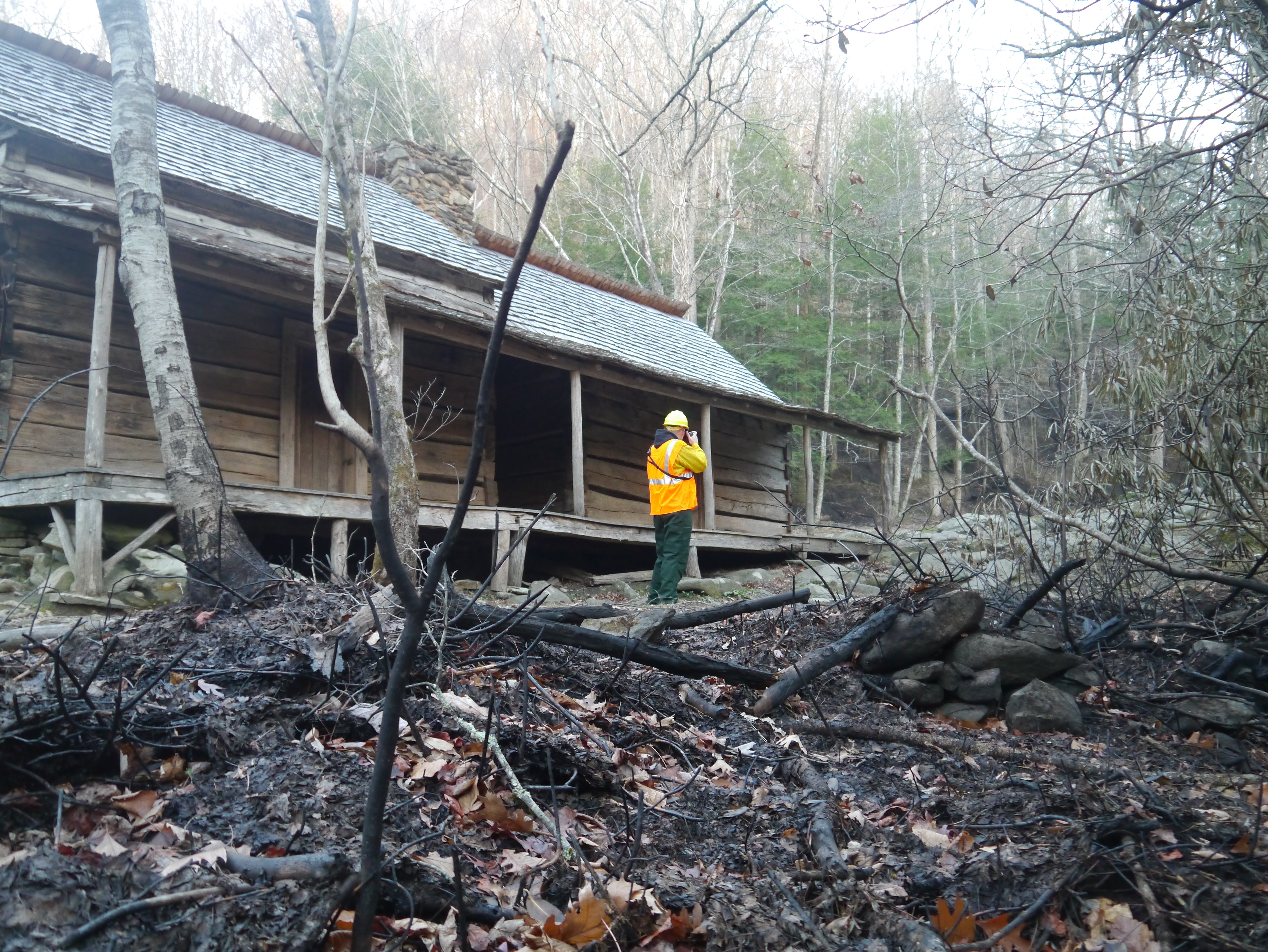
The results of an ambitious effort by University of Tennessee Libraries to capture the history and personal memories of the devastating 2016 Great Smoky Mountains wildfires are now accessible online five years after the disaster.
The Smokies fires of 2016, which came to a horrible head over that Thanksgiving weekend, killed at least 14 people and countless domestic pets and wild animals. Gale-driven flames burned through thousands of acres in the national park before escaping the boundary and destroying thousands of homes and other structures in Pigeon Forge, Gatlinburg and smaller communities throughout Sevier County.
“The social, cultural, economic, political, and natural impacts of this event are still being calculated,” according to UT Libraries.
Rising from the Ashes: The Chimney Tops 2 Wildfires Oral History Project, organized with the city of Gatlinburg and the Anna Porter library, collected 140 video and audio interviews with those impacted by the fires, including survivors, government leaders, first responders, scientists, clergy, journalists and mental health experts.
“This project documents one of the most momentous events in modern Tennessee history — in the voices of those who lived it,” said Steve Smith, dean of the UT Libraries in a news release.
“The collected stories document more than tragedy, however; they testify to the resilience of the human spirit. Our team is honored to help preserve these stories for history, study, learning, and research.”
All interviews are preserved within the UT Libraries’ Betsey B. Creekmore Special Collections and University Archives.
The 2016 Thanksgiving wildfire, which began on the Chimneys deep within the national park, was the largest in the eastern U.S. since the 1940s. It burned 17,000 acres, injured at least 200 people and forced the evacuation of thousands, according to UT Libraries.
“Visitors to the Rising from the Ashes website can approach the topic through different lenses such as the evacuation efforts, the disaster response and recovery, or the ecological impact; hear from medical personnel, business owners, or individuals directly affected by the wildfires; or simply browse through the recorded interviews,” according to a release announcing the final posting of the project.

- 2016 smokies wildfire
- smokies forest fire
- ut libraries
- oral history tn wildfire
- information about smokies wildfire
- tennessee wildfire history project
- anna porter library gatlinburg
- gatlinburg, tn
- pigeon forge
- rising from the ashes oral history ut
- dean of ut libraries steve smith
- november 2016 wildfires gatlinburg
- chimney tops wildfire
- tennessee wildfire
- 2016 sevier county wildfire
From fungi to trees, Smokies life gets back on track five years after conflagration
News Sentinel: Forest life blossoms five years after devastating Smokies wildfires
Researchers are tallying recovering species and noting some surprises five years after deadly wildfires tore through Great Smoky Mountains National Park and adjacent communities, according to News Sentinel science writer Vincent Gabrielle.
Fire-dependent species such as the table mountain pine are seizing new land as a result of the wildfires, and some scientists have been surprised by the proliferation of chestnut saplings. Those saplings are the progeny of remaining chestnut root systems, though few if any survive to maturity. The chestnut was largely eliminated from the American landscape more than 100 years ago by a blight that eliminated one of the most productive mast species in the Southern Appalachians.
Scientists are also intrigued by the reappearance of certain fungi decimated by the 2016 fires, which originated near the Chimneys and ultimately spread up Bullhead and then down into Twin Creeks and the surrounding developed communities. Fifteen people were killed and thousands of structures destroyed.
A lot of Smokies habitat is fire dependent, but few wildfires have been allowed to burn in the backcountry over the history of the park. The fire and its aftermath provide researchers a unique opportunity to determine the effects the fire had on the natural landscape and accompanying plants, fungi, trees and animals.