
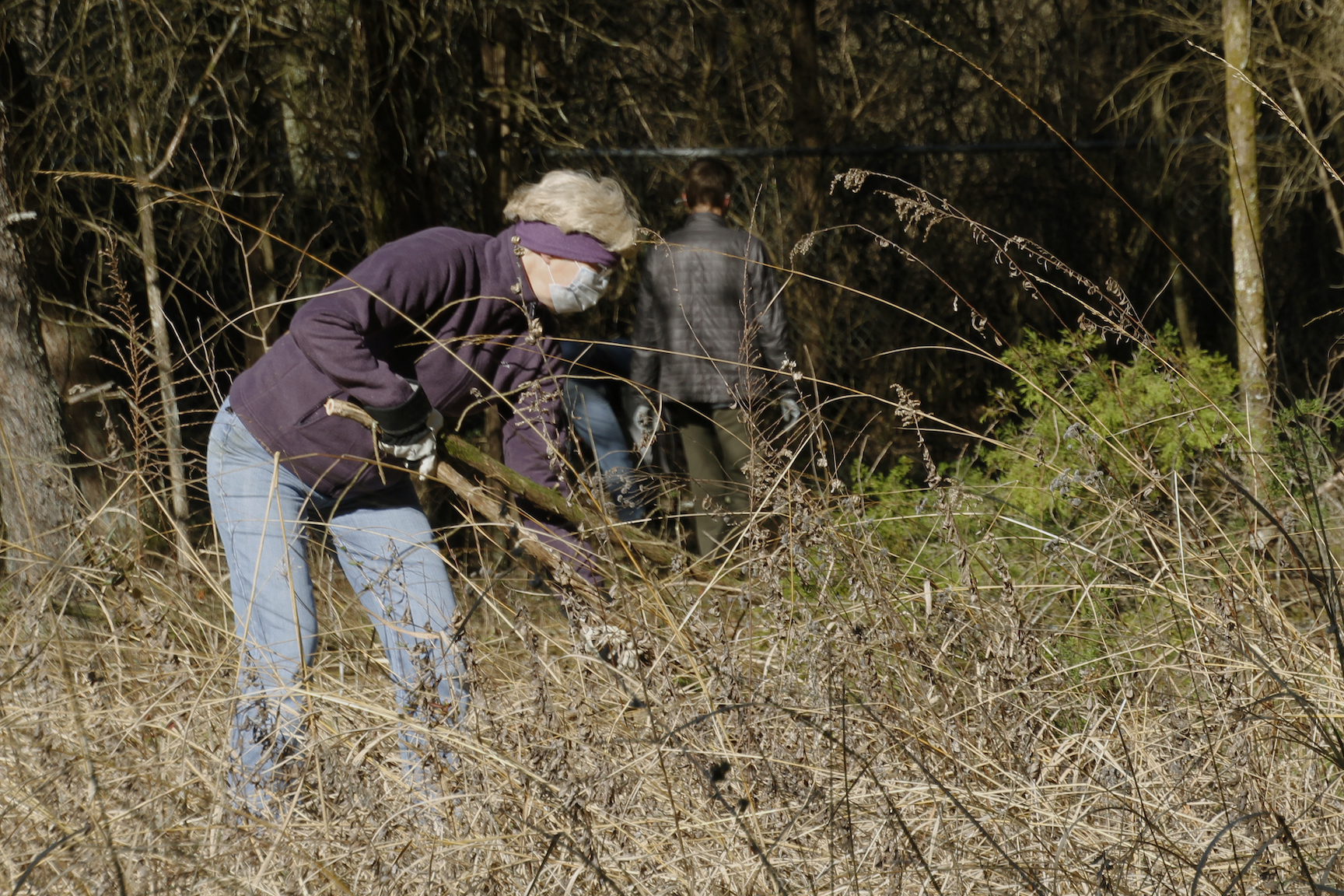
Current TCWP Executive Director Nancy Manning describes the group’s mission as preserving wild places and waters through protection, advocacy, stewardship and education, as outlined in its 1966 charter. A recent anniversary party on Aug. 1 at Ijams Nature Center gave early members and their friends a chance to reminisce about these accomplishments, and discuss future goals.
Among the speakers were David “Ace” Russell, Lianne Russel’s son, who expressed his gratitude to his mother and other members, even if he hadn’t been the one working on the organization’s goals.
“I’m just a guilty consumer of the good policy and wild places you guys have protected,” he said.
Manning said TCWP recently honored Chuck Estes for representing the values Lianne Russell laid out in TCWP’s charter. Estes also spoke at the anniversary event. He said the founders, including the Russells, used their scientific background to make arguments and dispute others points.
Estes said he used the skills he learned from first-generation TCWP members to argue before Crossville City Council for protecting Caney Fork River from a dam on behalf of TCWP.
“It’s in the DNA of this organization,” he said. “We have a strong scientific background. When we talk, people know we are speaking the truth.”
Rails to Trails
More recently, TCWP and Manning have been working on a rails-to-trails project, a 42-mile trail converted from a railroad. It will go from Oneida in Scott County to Anderson County’s unincorporated New River community. Manning said it will be the longest rail trail in Tennessee and third longest in the southeast United States. In December, the Trust for Public Land will purchase it from its current owner R.J. Corman.
“Whenever these projects are proposed there’s a lot of opposition,” Manning said. She said fears include thefts, trespassing and use by all-terrain vehicles. But Manning has been reaching out to critics near the seven to eight miles in Anderson County and says she’s convinced many of them now.
“I got to tell you, I am from North Hollywood, California,” she said. “I am the last person that should have been accepted in a rural community like this. I fell in love with the New River Community.”
She said she spoke to and even made friends with several residents. She specifically spoke of one resident James Burge, who now serves on the board of Echoes, another group involved in the rails-to-trails project. She also worked for eight months to get Anderson County Commission to approve a resolution earlier this year, which Manning said helped the project get grant funding.
“If you make a friend from New River, you make a friend for life. If you make an enemy from New River, you make an enemy for life,” said area commissioner Shain Vowell before approving the resolution. The line stuck with Manning and she quoted it.
“I told that story to Ace Russell, who said that’s exactly what his mom did during the strip mining,” Manning said regarding her work on outreach. She noted that Lianne Russell went into the same areas and built relationships with the same area’s people, inviting them to her house.
“That made me feel in touch with Liane, even though Lianne passed away and I never knew her,” Manning said.
The trust released this statement July 7 following an important milestone in the trail project:
"Trust for Public Land (TPL) has reached an interim trail use agreement with R. J. Corman Railroad Property, LLC, clearing the way for creation of a 41-mile, multi-use trail that will follow a historic former rail corridor through Scott, Campbell, and Anderson Counties in East Tennessee.
"Under the National Trails System Act, the agreement allows the corridor to be preserved for interim public recreational use while keeping it intact for future economic need. Once developed, the Tennessee Highlander Trail will provide a new, safe route for walkers, runners, and cyclists across three counties, providing new access to the region’s natural and historic landscapes.
"A joint notice of the agreement between TPL and R. J. Corman Railroad Property was filed with the federal Surface Transportation Board on April 24, 2026. On May 18, 2026, the Anderson County Commission unanimously passed a resolution in support of the trail, joining the Town of Oneida and a number of other regional governments, local leaders, civic organizations, and residents in the region who have voiced support for converting the corridor to public use.
"The project reflects years of collaboration among TPL, R. J. Corman Railroad Property, local governments, and a coalition of community partners committed to preserving the corridor for public benefit, namely Tennessee Citizens for Wilderness Planning (TCWP) and Echoes of the Tennessee Rail Foundation."