
Displaying items by tag: national parks conservation association
Government censorship rolls toward Smokies
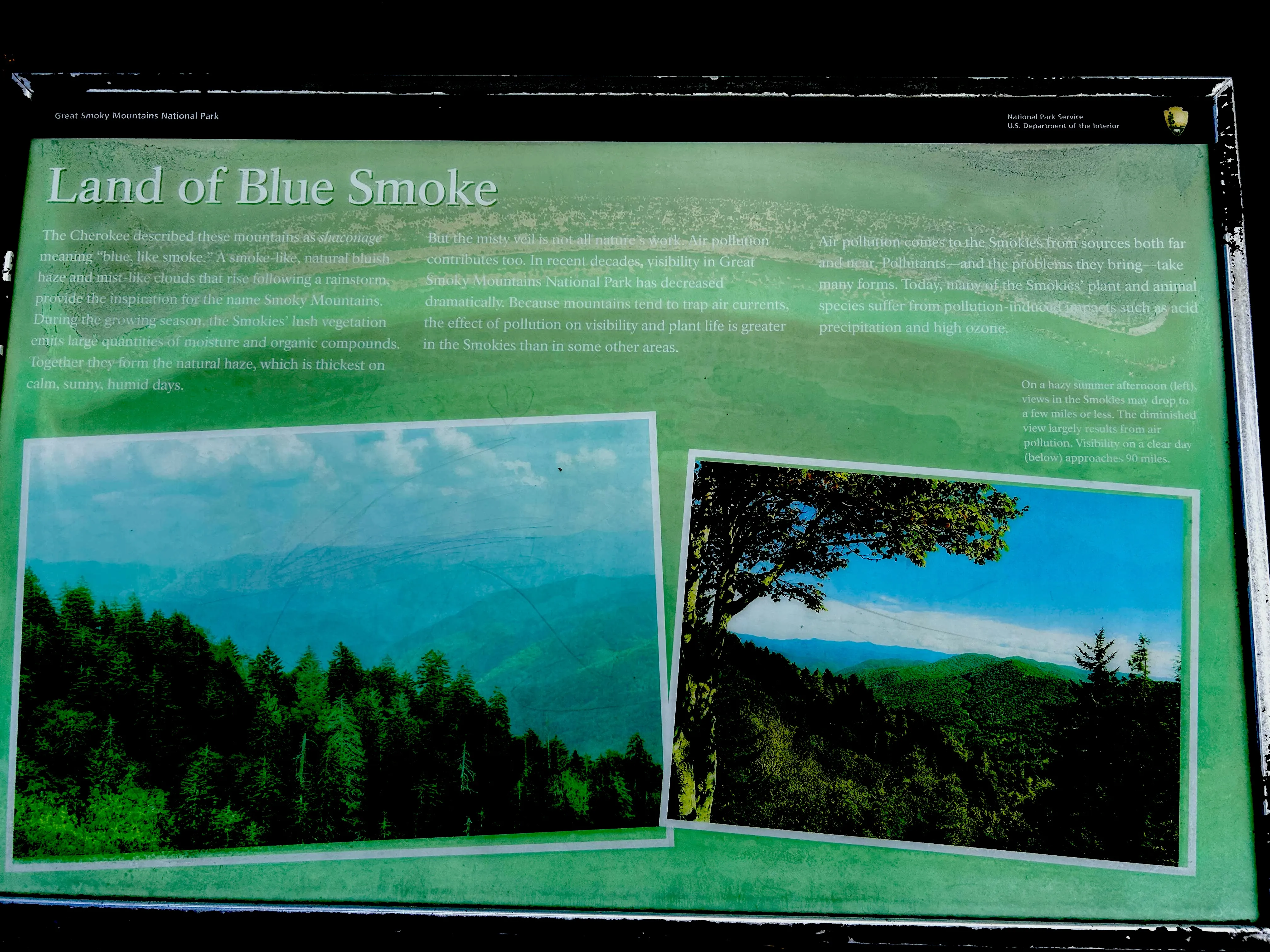 This interpretive sign describing both the Smokies natural haze and the impact of air pollution on the park are among the numerous signs and exhibits targeted for removal from Great Smoky Mountains National Park by a Trump executive order. Save Our Signs
Trump executive order targets history, science and culture in Great Smoky Mountains National Park
This story was originally published by Compass.
GATLINBURG — The Trump Administration’s war against “woke” appears poised to extend to Great Smoky Mountains National Park.
Ten interpretive signs within the park referencing slavery, science and the Cherokee are included in a leaked dataset of national park educational features subject to removal, according to a Compass review of the now publicly available document.
The signs are subject to removal per the “Restoring Truth and Sanity to American History” executive order from President Donald Trump, issued in March 2025.
Pierce Gentry at WUOT first reported the inclusion of the Smokies in a massive leaked database that lists hundreds of Department of the Interior sites with signs, exhibits, films and publications that the administration deems offensive.
The Department of the Interior and National Park Service have already removed signs from park-service units elsewhere, including displays at Independence National Historical Park in Philadelphia that highlighted the people enslaved by George Washington during the Revolutionary War era. A lawsuit is pending.
- great smoky mountains national park
- great smoky mountains national park climate change
- smokies sign censorship
- cherokee
- kuwohi
- air pollution in smokies
- national park sign removal
- national parks conservation association
- save our signs
- acid rain in smokies
- thomas fraser journalist
- compass knox
- enloe cemetery
- black history
- science censorship
- trump vs science
- leaked interior department dataset
- restoring truth and sanity to american history
- smokies views
- look rock
- air quality in smokies
Updated 4/18: Smoky gray: Former Smokies leader warns of more funding cuts; popular campsites remain closed; still little information on cuts at Great Smoky Mountains National Park
 Campers are seen enjoying a morning at Elkmont Campground in Great Smoky Mountains National Park. Elkmont is one of the Smokies campgrounds still open. National Park Service
National parks advocate and former Smokies official warns of funding shortfalls as closures continue, concerns persist, and people resist
KNOXVILLE — Funding for national parks has never amounted to much, and the federal government will cut even more if people don’t speak out in defense of the country’s natural and ecological crown jewels.
That was the message from Phil Francis, chairman of the Coalition to Protect American National Parks and former acting superintendent of Great Smoky Mountains National Park. He spoke to an audience at Knoxville’s Schulz Bräu Brewing Company hosted by Discover Life in America. Francis said that due to rising concerns his organization grew from 500 members to over 4,000 during the Trump administration. The coalition, he said, includes many people like himself who used to work for the park system, including the former superintendent of Acadia National Park.
Francis advocated that others should lobby government officials to continue to support the parks.
“If you don’t speak up, it makes it a lot more difficult,” he told the audience.
- elan young
- smokies job cuts
- federal job cuts
- rangers
- smokies rangers fired
- how many lost jobs at smokies
- smokies parking fees
- great smoky mountains economic impact
- national parks conservation association
- association of national park rangers
- hellbender press reporting on job cuts
- probationary workers fired
- great smoky mountains national park
- big south fork national river and recreation area
- maintenance backlog
- jeff hunter
- bill wade
- cades cove loop road
- carfree experience in cades cove
- carfree wednesdays in cades cove
- garry shores
- townsend
- townsend protest
- gatlinburg protest
- phil francis
- discover life in america
- ben pounds
- national park funding
- trump national park cuts
Updated 8/14: Plans for Foothills Parkway extension from Wears Valley to Gatlinburg enter newest public input phase

Critics have called for full Environmental Impact Statement amid threat to Southern Appalachian habitats; previous draft EIS identifies many rare, notable species in project right of way
GATLINBURG — Proposed construction of an unfinished section of Foothills Parkway from Wears Valley to the Gatlinburg Spur would traverse 9.8 miles of natural beauty that is home to multiple rare species identified in a 1994 study.
The federal government last month opened the latest round of public comment on the project, which would traverse Buckeye Knob and Cove Mountain and multiple aquatic and karst environments. Concerns raised by the public over the decades range from impacts on domestic water supplies and endangered or threatened species to the fact the roadway might be a catalyst for excessive tourism infrastructure in Townsend and Wears Valley.
The proposed route also extends through dense areas of pyrite, a highly acidic sulfate mineral (also known as fool’s gold) that can poison entire watersheds when exposed if proper erosion controls aren’t followed. Contamination of streams and creeks led to the decades-long delay in full construction of the existing parkway section (known as the missing link) that extends from Walland to Wears Valley.
- foothills parkway extension
- opposition to foothills parkway extension
- smokies foothills parkway
- nepa
- endangered species foothills parkway
- fhwa federal highway administration
- ea environmental assessment
- nepa national environmental policy act
- nhpa national historic preservation act
- national parks conservation association
- pyrite
- jeff hunter
- missing link of foothills parkway