
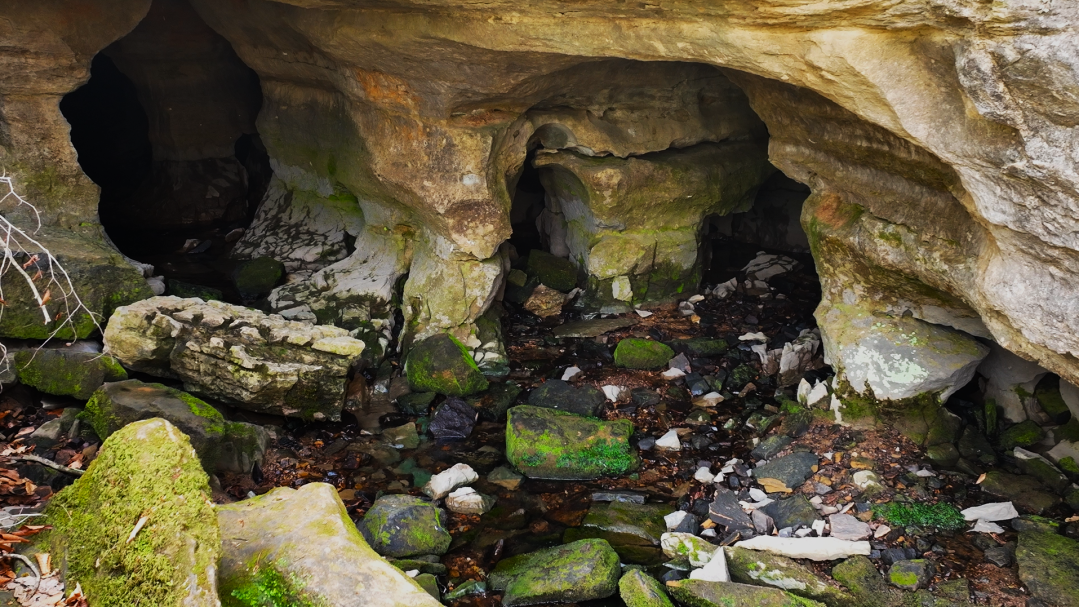
Through an intricate network of caves, water disappears to resurface again in a multitude of ways. “Many of our favorite places in Tennessee are designated where this groundwater surfaces through springs and waterfalls, and the forests above these karst systems play a vital role in protecting groundwater quality,” Hudson Pell continued. “All of this supports the unique plants and animals that depend on these fragile subterranean ecosystems. Together, we’re proud to take another large step in conserving these natural assets.”
The property also lies within the Scotts Gulf Area of Interest, as identified by the Tennessee Heritage Conservation Trust Fund Act and is also part of the Middle Cumberland Plateau Conservation Opportunity Area designated in Tennessee's 2025 State Wildlife Action Plan (SWAP). These designations recognize the property's importance as a conservation priority at both the state and regional levels. According to TN’s SWAP, the eastern half of the property ranks as highest-priority terrestrial habitat, while the entire 413-acre tract is recognized as high-priority habitat for subterranean ecosystems.
“Projects like this show what’s possible when conservation partners come together around a shared vision for Tennessee’s future. The Conservation Fund is proud to bring our expertise to these collaborative efforts, helping protect special places like Scott’s Gulf and the Cumberland Plateau for people and wildlife. We look forward to building on this partnership and continuing to help conserve the places that make Tennessee so extraordinary," said Zachary Lesch-Huie, Tennessee state director at The Conservation Fund.
White County—home to one of the highest densities of caves in the United States—contains an extraordinary network of underground streams, sinkholes, springs, and caves that support rare aquatic species found nowhere else. Conserving forests overlying these cave systems is essential. This acquisition safeguards delicate ecosystems above and below, ensuring clean groundwater, stable cave environments, and the long-term health of Tennessee's globally significant karst landscape.
"This property helps strengthen an important conservation corridor on the Cumberland Plateau, protecting forests, streams and habitat that support an incredible diversity of plants and wildlife," said Gabby Lynch, Director of Land for The Nature Conservancy in Tennessee. "Its addition to Scott's Gulf Wilderness State Park ensures these natural resources will remain protected while expanding opportunities for people to experience and connect with this remarkable landscape."
With this transfer, the full 413-acre property will now be managed as part of Scott's Gulf Wilderness State Park, strengthening one of Tennessee's premier wilderness destinations while enhancing opportunities for both conservation and future outdoor recreation. It also adds to TennGreen’s legacy of protection that includes Virgin Falls and other beloved, vital keystones of the region as development pressures continue to reshape the state's rural landscapes.
Partnerships like this demonstrate how collaborative conservation can protect not only spectacular scenery, but also the forests, waterways, wildlife habitat, and natural heritage that make the Cumberland Plateau one of Tennessee's most extraordinary places.